



There's a ton of different nut butters, spreads, and creams available in stores. It's hard to navigate. That's why I decided to prepare this guide for you: Which Peanut Butter Should You Choose?
Peanut butter vs. peanut paste
I often see recurring questions on internet forums and Facebook: “What is the difference between peanut butter and peanut paste?”, “Is peanut paste better than peanut butter?”
The product's name doesn't mean anything. This is due to legal confusion following the judgment of the Court of Justice of the European Union in Case C-422/16 of 14 June 2017:
“Products of purely plant origin cannot, in principle, be marketed under names that, such as “milk”, “cream”, “cheese”, “butter” or “yogurt”, are reserved by EU law for products of animal origin.” Link to press release.
Since 2018, the term "peanut butter" has been banned . Manufacturers have been forced to use a different name. Therefore, products now appear on shelves under the following names:
- nut paste
- nut cream
- nut pulp
These are peanut butters just under a different name.
Peanut butter - composition
It's always worth checking the ingredients of any peanut butter you're considering purchasing. I once checked every jar available in the store and was shocked by what could be found in such a theoretically simple product.
That's how my adventure with making organic nut butters began. I wondered why there weren't any additive-free peanut butters in stores? Maybe it just couldn't be made?
I even remember my first call to the sanitary inspectorate when I reported that we wanted to start production: "Okay, but how are you going to preserve it? It'll spoil soon." The inspector couldn't believe the product would be a success, even though we'd already completed six months of storage tests on our butter and everything was microbiologically sound.
It was 2013, so it's perhaps not surprising. Back then, there were no such products on the market, and we were the first company in Poland to produce 100% nut butters.
Examples of ingredients for classic nut butters:
- Butter No. 1: ingredients: peanuts (65%), sunflower oil, dextrose, fully hydrogenated palm fat, salt.
- Butter No. 2: ingredients: roasted peanuts 81%, vegetable oil, glucose, hydrogenated vegetable fat, salt.
- Butter No. 3: ingredients: peanuts (70%), glucose syrup powder, sunflower oil, palm oil, salt.
Peanut butter 100% nuts
Good quality peanut butter should contain only nuts, nothing else. There's no justification for any additives. Peanut butter without sugar or preservatives can easily have a one-year shelf life. Therefore, there's no reasonable justification for peanut butter to contain any additives.
Look for on the label: Ingredients: 100% name of your favorite nuts, e.g. Ingredients: 100% organic roasted peanuts.
Which peanut butter should I choose? One that's 100% nut-free :)
Peanut butter without salt and sugar
Peanut butter should not contain salt, sugar, or hydrogenated fats, such as palm oil. You need to pay special attention to this.
Peanut butter - which one to choose?
Wondering which peanut butter to buy ? The composition of peanut butter is very important, but it's not the only distinguishing feature of good quality peanut butter. It all starts with the nuts from which the butter is made.
Discover the secret of our peanut butter. Wondering where that intensely nutty flavor comes from?
Secret #1 - Organic Nuts are the essence
We use the same whole nuts you'll find in our store as a snack.
Secret #2 - Always Slow Roast
Only whole peanuts can be slowly roasted to bring out the full flavor of the peanuts.
Secret #3 - Two-stage grinding
The cooled nuts are patiently waiting for two-stage grinding to return to you in your favorite liquid consistency.
Now you know how our peanut butter is made.
Why is it worth choosing ORGANIC Peanut Butters?
The motto of organic farmers: "Produce without destroying the Earth, feed without harming consumers" is very close to my heart. That's why I believe it's worth choosing organic peanut butter .

Peanut butter
Peanuts are also known as peanuts or peanut butter. Peanut butter is the same product as peanut butter .
Hazelnut butter
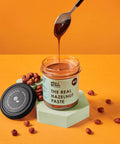
This is my favorite peanut butter. It's made from roasted hazelnuts. Hazelnut butter has a fairly liquid consistency and a slightly bitter taste. Note: This butter isn't sweet and doesn't taste like the popular "Nutella." However, that doesn't change the fact that it's delicious and has a strong hazelnut flavor.
Cashew butter
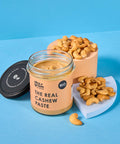
A naturally sweet peanut butter (the sweetest of all). Very delicate in flavor. Available in two versions. Our cashew butter is made from raw nuts, so it has a fairly firm consistency, not runny. Butter made from roasted cashews is creamier.
Almond peanut butter
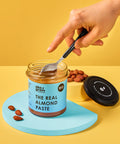
This is my next favorite butter after hazelnut butter. Almond butter is made by grinding roasted almonds with their skins. It has a very deep, intense almond flavor.

Peanut butter nutritional value
Peanut butter contains almost 25% protein, which is why it is a nice high-protein addition to meals for vegans and athletes, for example.
The best peanut butter
Choose the one you like best. Try all the flavors and choose your favorite nut butter. I especially recommend hazelnut and almond <3
Healthy peanut butter
Peanut butter is a healthy addition to meals. However, it's important to remember that nuts are quite fatty and should be consumed in moderation. I know it's difficult, but what can you do?
Peanut butter ranking
We have over five years of experience producing and selling nut butters. This gives us access to statistics on which nut butters you like the most. This is how our nut butter ranking was created.
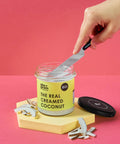
1. ORGANIC Coconut Mousse - not everyone considers it a butter, but coconut is also a nut :)
2. Organic Hazelnut Butter
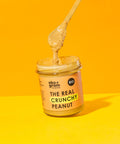
3. Organic Peanut Butter
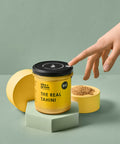
4. Organic Tahini (sesame butter)
5. Organic almond butter
6. Organic Cashew Butter
Price of peanut butter
The price of nut butter depends on its quality and the type of nut. Peanut butters are the cheapest, hazelnut and almond butters are in the middle, and pistachio and pecan butters are the most expensive and often hard to find.
How to make peanut butter?
If you have a powerful blender at home, you can try making your own peanut butter. Peanut butter is the easiest to make at home, as it's easy to buy pre-roasted (raw peanuts will result in a mush, not a creamy butter). Add a few handfuls of peanuts to the blender, enough to cover all the blades, and blend until creamy, about a few minutes.
To make hazelnut butter, first toast the hazelnuts in a dry pan. Toast until you notice a pleasant nutty aroma. Then, let the hazelnuts cool to room temperature and blend them just like you would with peanuts.
Almond butter and tahini are a bit more difficult to prepare. The key here is the roasting level of the almonds/sesame seeds. They shouldn't be too lightly or too heavily roasted, as otherwise the butter won't be creamy. Trial and error is the only way to achieve the perfect roasting level.
What about you? What are your favorite nuts to make peanut butter with? Let me know in the comments!



Comments (0)
There are no comments for this article. Be the first one to leave a message!