










Organic certificate Ekogram – know what you eat!
Since you're here, it means you care about what ends up on your plate. At Ekogram, for 16 years now, we've been proving that organic food is not just a passing trend, but primarily a return to nature and pure ingredients.
We are proud of Poland's first factory for 100% organic nut butters, but our entire facility operates like a well-oiled machine – under constant supervision of experts.
We have held our certificate for organic farming product processing continuously since 2013. We are under constant control by the independent body PL-EKO-03 (Cobico / KIWA).
What exactly do an organic certificate and the mysterious number PL-EKO-03 mean?
A organic certificate is not just a piece of paper you can buy. It is an official EU document confirming that our processing plant operates 100% in accordance with rigorous European Union law (mainly EU Parliament and Council Regulation 2018/848).
What does this mean for you in practice?
- Clean ingredients: All raw materials come exclusively from certified organic farms.
- Zero chemicals: There is no place for artificial pesticides, herbicides or GMOs in the production process.
- No artificial preservatives: We only use absolutely essential, natural additives from a very short EU list.
- Full traceability: We are able to reconstruct the journey of every jar of peanut butter from the moment the nut is harvested from the field until it is delivered to your door.

How to decipher the PL-EKO-03 code?
This code is a unique identifier, which you can find on our labels:
- PL – country where the certificate was issued (Poland).
- EKO – indicates certified organic production.
- 03 – our certification body number (Cobico, currently KIWA-Cobico).
The rest of the code found on documents (e.g., PL-EKO-03.616-0001164.2026.003) is the specific number of our company, the year of validity, and the document issue number.
The green leaf (Euro-leaf) — what does it really guarantee?
The distinctive green leaf composed of EU stars is the official logo used to label safe organic food throughout Europe. Its placement on packaging is mandatory for pre-packaged products, but the producer may use it only if:
- At least 95% of agricultural ingredients meet strict organic farming requirements.
- Next to the logo, there is the certification body's number (e.g., PL-EKO-03).
- The label clearly states the origin of the raw materials (e.g., "EU Agriculture", "Non-EU Agriculture").
Remember: If you see a large, eye-catching "BIO" or "NATURAL" label on the packaging, but the green leaf and certification body number are missing – this product is not organic in the eyes of the law!
BIO, ECO, ORGANIC — are they the same?
Short answer: Yes, it's exactly the same. In European Union law, the words BIO, ECO, and ORGANIC are synonyms and are subject to the exact same legal protection. If a manufacturer uses these terms without a valid certificate, they are simply breaking the law. The differences are purely linguistic and marketing-related:
- In Poland, the word ECO has historically been the most widely adopted.
- In Germany and France, BIO predominates.
- In Anglo-Saxon countries, ORGANIC is the standard.
Regardless of the word on the label – if there's a leaf, it's truly organic food.
What does the certification body audit look like?
The status of a BIO producer is not given once and for all. Every year, we undergo a meticulous, often stressful audit. An inspector from KIWA-Cobico checks absolutely everything:
- Documents and invoices: Did we purchase exactly as much certified raw material as we later sold in jars (the so-called mass balance)?
- Cleanliness of production lines: How thoroughly do we clean the machines (this is crucial, as in our factory we ensure an absolute lack of cross-contamination)?
- Batch records: Production and warehouse ledgers must match down to the gram.
- Laboratory tests: Inspectors regularly take samples to independent laboratories, looking for pesticide residues, GMOs, or ethylene oxide. What's more, some controls throughout the year are completely unannounced!
What exactly is certified by us?
Our organic certificate covers the entire spectrum of processing activities. When you buy from us, you can be sure that the following are organic:
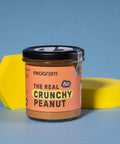
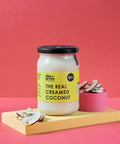
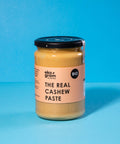
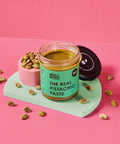
- BIO nut butters and pastes (our core business: peanut, almond, coconut, sesame, and many others),
- Organic oils (including excellent extra virgin olive oil),
- Nuts and dried fruits without sulfur,
- Organic groats, rice, grains, and flours,
- Spices, real cocoa, original matcha, and other superfoods.
How to check our organic certificate - step by step
Want to check up on us? Excellent! Transparency is our foundation. You can verify any company claiming to be "ECO" in the EU in 30 seconds:
- Go to the official database of operators: TRACES NT.
- In the "Country" field, select: Poland.
- In the "Control body" field, select our unit: PL-EKO-03 (Cobico / KIWA).
- In the search field, enter NUTKRAFT and click Search.
- Done! You will see the current certificate status, validity date, and a complete list of products.
Frequently Asked Questions (FAQ)
Does every product with "BIO" on the packaging have a certificate?
It should, as these names are legally protected. Unfortunately, abuses still occur on the market. Therefore, always look for the green leaf and the unit number on the packaging, e.g., PL-EKO-03.
Can an organic certificate simply be bought?
Absolutely not. You pay for the audit process and the work of inspectors, but the fee is no guarantee of success. If the audit reveals irregularities or the laboratory detects prohibited chemicals – the certificate is immediately suspended or revoked.
Is organic food actually healthier?
Numerous studies (including our conversations with experts, such as Dr. Ewelina Hallmann) show that certified organic food contains significantly fewer pesticide residues and heavy metals, and plant products often have higher concentrations of valuable antioxidants (polyphenols). By choosing ORGANIC, you relieve your body of unnecessary chemicals.
Why are organic products more expensive than conventional ones?
This stems from the very nature of organic farming. Yields per hectare without artificial fertilizers are lower, field work often requires manual methods, and raw materials themselves are much more expensive to purchase. Add to this the costs of regular laboratory tests and certification. You pay for a clean product and the honest process of its creation.
Download our current organic certificate 2026/2027
NUKRAFT Organic Certificate 2026/2027
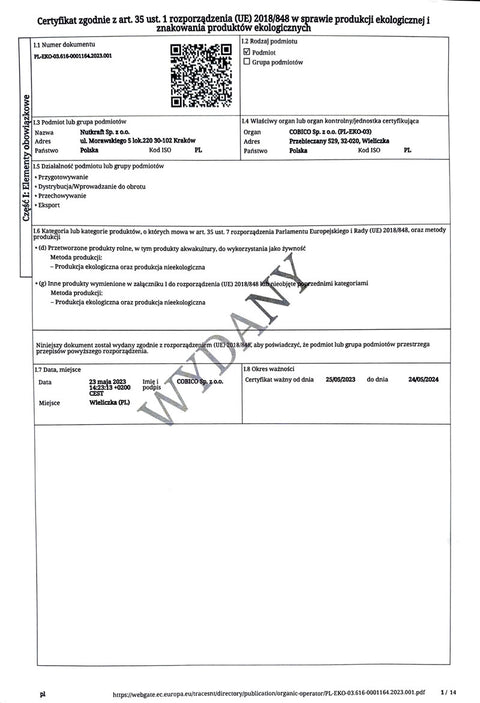
Download archived certificates
Click below to view the certificate:-
NUTKRAFT - Certificate - 2025/2026
-
ANAGRAM - Certificate - 2025/2026
-
NUTKRAFT - Certificate - 2024/2025
-
ANAGRAM - Certificate - 2024/2025
-
NUTKRAFT - Certificate - 2023/2024
-
ANAGRAM - Certificate - 2023/2024
-
ANAGRAM - Certificate - 2022/2023
-
ANAGRAM - Certificate - 2021/2022
-
ANAGRAM - Certificate - 2020/2021
-
ANAGRAM - Certificate - 2019/2020


