








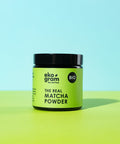







Organic Matcha

Order by 12:00 and we will send your parcel today (working days)
How much does shipping cost?
Free delivery for orders over 199 PLN
InPost Parcel Lockers 24/7 - PLN 14.99
InPost courier - PLN 15.99
DPD courier - PLN 16.99
Personal collection in Krakow - free of charge
What payment methods are available?
- BLIK
- fast transfer with Przelewy24
- Apple Pay
- Google Pay
- Credit card

THE REAL DELIVERY* – Package under warranty
We have been shipping glass jars for over 15 years and we know how to do it. If something happens during transport, you don't have to worry about anything.
Just send us a photo and a simple form, and we'll send you new products, no questions asked.
-

Natural taste
-

BIO certified
-

Sensibly packaged


Green powder full of precious properties
Matcha tea, ground into a fine green powder, boasts a unique flavor, strong aroma, and a wealth of beneficial properties. It has been used for centuries in Japan during traditional tea brewing and consumption ceremonies. This unique green tea was cultivated by Buddhist monks thousands of years ago. It was believed to boost energy, strength, and fortitude. Today, as the trend toward healthy eating spreads worldwide, Matcha is experiencing a resurgence. It's not only brewed and drunk, but also added to many dishes.
Tea that grows in the shade
Matcha is a green tea, but a refined one – it grows in the shade, giving its leaves a much higher content of the green pigment, chlorophyll. Each leaf is hand-picked, then steamed, dried, and ground into a fine powder. Matcha contains little caffeine but plenty of antioxidants, which are valuable for our bodies. It also boasts a wealth of vitamins, minerals, and fiber. Interestingly, a cup of Matcha is 10 times richer in all these valuable substances than a cup of regular green tea.
How to prepare matcha?
How to prepare a traditional infusion
See the blog post on how to prepare matcha .
Matcha can be added to many dishes.
Green Matcha powder can be used to create not only an energy-packed drink, but also to add to many dishes, enhancing their flavor and nutritional properties, as well as achieving a more visually appealing effect. Matcha can be added to ice cream, desserts, pancakes, cookies, tarts, and nutritional smoothies, giving dishes a beautiful green color.
How is Ekogram matcha made?
Matcha quality is influenced by many factors, such as the country of origin (China/Japan), the type of cultivation (conventional/organic), and the amount of leaves from a specific harvest. These are the most important parameters. Simply referring to the name (ceremonial/premium/luxury/traditional/everyday/culinary) can be misleading, as each producer uses different nomenclature. In our observation, this grade is often overstated.
Organic Matcha Ekogram comes from certified organic farms in Japan. Harvest takes place in the Kyoto and Kagoshima prefectures. Our organic matcha consists primarily of leaves from the second harvest , but may also contain a small amount of leaves from the third harvest. In our opinion, this is the best price-to-quality ratio. It's the perfect matcha for everyday enjoyment. The next level of quality would be 50% more expensive, and 95% of us wouldn't notice the difference.
Nutritional value per 100 g
- energy value1382 kJ / 330 kcal
- fat4,2 g
- including unsaturated fatsbd
- carbohydrates52,2 g
- including sugarsb.d
- protein20,9 g
- salt0,01 g


