
























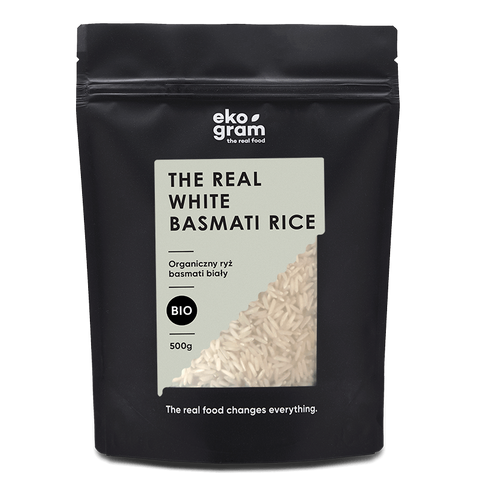
Organic Basmati Rice - White

Order by 12:00 and we will send your parcel today (working days)
How much does delivery cost?
- Free delivery for orders over PLN 199
- ORLEN Paczka - PLN 6.99
- InPost Paczkomaty 24/7 - PLN 14.99
- DPD Pickup - PLN 15.99
- InPost Courier - PLN 15.99
- DPD Courier - PLN 16.99
- Personal pickup in Krakow - free
What payment methods are available?
- BLIK
- fast transfer with Tpay
- Apple Pay
- Google Pay
- Credit card

THE REAL DELIVERY* – Package under warranty
We have been shipping glass jars for over 15 years and we know how to do it. If something happens during transport, you don't have to worry about anything.
Just send us a photo and a simple form, and we'll send you new products, no questions asked.
What makes basmati rice special
Many centuries ago, at the foot of the world's highest mountains – the Himalayas – farmers developed a rice variety that is now considered the best in the world. Known as the "prince of rice", it produced long, thin, snow-white grains with a wonderful nutty flavor and aroma. It was named basmati, which means "fragrant". Food lovers quickly came to appreciate it. In the 20th century, big corporations became interested in basmati rice – so much so that there was even a case of biopiracy, when an American company tried to patent basmati rice as its own invention. A wave of protests swept the world, so the "prince of rice" never came under a US patent and is still the work of Pakistani and Indian farmers.
How to use basmati rice?
It's a perfect base for all kinds of Asian dishes. Pilafs, risottos, casseroles, soups and even baked goods are just a few examples. Organic basmati rice is a must-have for vegans and vegetarians, as well as for people avoiding gluten. Its beautiful long grains look very elegant, so when cooked fluffy, they make an attractive addition to salads.
White basmati rice
An excellent rice variety – white basmati rice works in both sweet and savory dishes. Properly cooked, it's a valuable part of a balanced diet. Basmati is naturally gluten-free, so it's a good choice for people who have cut gluten from their diet. Once cooked, the snow-white grains stay fluffy and don't stick together. This type of rice goes especially well with seafood and fish.
How to cook fluffy rice without a cooking bag?
Nutrition information per 100 g
- energy1527 kJ / 365 kcal
- fat1,3 g
- of which saturates0,2 g
- carbohydrate78,6 g
- of which sugars0,1 g
- protein7,1 g
- salt0,01 g


