











Coconut Paste – Coconut Butter – what is it and how to use it?
Do you like Rafaello? Discover a product that will allow you to prepare a healthier version of it! What is coconut paste and what are its properties? How to melt it? How to use it in your kitchen? Find out!
Quick Answer (TL;DR)
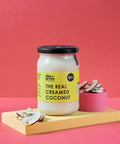
Coconut paste (also known as coconut butter, coconut meat, or creamed coconut) is 100% ground coconut flesh. At room temperature, it is usually solid, but you can easily melt it in a double boiler. It is most often used as a coconut topping for pancakes, curries, cream soups, desserts, and for making homemade coconut milk.
Watch a video about coconut paste
What is coconut paste?
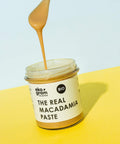
Coconut paste, also known as coconut butter or coconut manna, is a product made from coconut. It is produced by drying the coconut flesh, which is then ground into a creamy paste. At room temperature, coconut paste usually has a solid and thick consistency. However, it can be easily melted, and by adding water, it can be turned into coconut milk or cream.
Separated coconut oil on the surface is a common phenomenon for this type of product. Good coconut paste should contain only coconut flesh – without any additives: sugar, preservatives, or colorings.
Coconut manna vs. coconut paste – is it the same thing?
Yes. Coconut manna and coconut paste are interchangeable names for the same product. In Poland, we don't have a long tradition of using coconut products, so there isn't one customary name. You will most often encounter the terms: coconut manna, coconut paste, coconut flesh, and coconut butter. These are Polish translations of English creamed coconut.
{{single_product_01}}
How to melt coconut paste?
If you live in Poland, the coconut paste you buy in a store might have quite a hard and compact texture. Coconut paste will only be liquid during the hot, summer months – at that time, due to higher temperatures, it naturally changes consistency.
Fortunately, coconut paste can be easily melted. How to do it?
- Boil water in a small pot and turn off the heat.
- Place the jar of coconut paste into the hot water and wait about 5–10 minutes.
- Remove the jar and mix the paste thoroughly.

Done 🙂

Properties of coconut paste
Coconut paste is quite a fatty and caloric product, similar to other nut butters. It is very tasty, so it should be used in moderation. 🙂 Due to its low sugar content, it is often used during the keto diet and when introducing solids to infants (in this case, it is always worth consulting a pediatrician).
Nutritional values (per 100 g):
- Energy value: 610 kcal / 2552 kJ
- Fat: 61 g
- Of which saturated fatty acids: 57 g
- Carbohydrates: 17 g
- Of which sugars: 8 g
- Protein: 7 g
- Salt: 0 g

Is coconut paste vegan?
Yes. Coconut paste is a 100% vegan product, provided it is made solely from coconut flesh without any additives. It is always worth checking the product label. If you are looking for a vegan substitute, e.g., for cream, coconut paste will be a great alternative.
Is it mold? My paste looks spoiled
Coconut paste is a product without preservatives and stabilizers, which is why it will separate over time. This is a completely natural process. Virgin coconut oil will appear on the surface of the jar. Initially, these will be small spots that may look similar to mold at first glance. However, it is not mold, but coconut oil.
In manna that has been on the shelf for a few months, even a centimeter-thick layer of coconut oil may collect on the surface. This is natural and reversible – just heat the jar and stir.


How to store coconut manna?
Coconut manna can be stored at room temperature – preferably in a dark place. It does not need to be refrigerated after opening the jar.
Exception: if you tend to eat manna with a spoon directly from the jar, you can store it in the refrigerator. However, remember that manna taken straight from the refrigerator has a very hard consistency. After opening, the jar can be stored until the expiration date.
Coconut manna vs. coconut oil – what's the difference?
Coconut manna and coconut oil are often confused. Both products are white and placed in a glass jar. So what is the difference between coconut manna and oil? Let me explain.
- Coconut manna is a product made from the whole coconut, not just the fat itself. It is used as an addition to dishes and as a topping for pancakes and fritters. It is not suitable for frying. The difference can be compared to peanut butter and peanut oil.
- Coconut oil is just the fat from the coconut. We can use it for frying or as a cosmetic for hair and skin.


What to use coconut manna for?
Coconut manna works well as an addition to any dish that combines with the intense flavor of coconut. Most often, these are Asian and Indian recipes, such as curries and thick cream soups. Coconut paste also goes great with sweet desserts, ice creams, and cakes (e.g., cheesecake).
What to use coconut paste for? Most popular uses
- Topping for pancakes, omelets, fritters, and pancakes
- Homemade coconut milk – exactly as much as you need
- Curries, sauces, and cream soups (Indian and Asian cuisine)
- Oatmeal and rice with coconut milk (without blending)
- Desserts (creams, glazes, ice creams, cakes)
- Snacks like energy balls, Rafaello
Coconut sauce, topping for pancakes
The most popular way to use coconut manna is as a topping for pancakes, omelets, fritters, and pancakes. It can be used just like all other nut butters. Spoon out some paste, place it preferably on a warm pancake – then the paste will quickly melt and after a moment, a creamy, coconut glaze will form.
How to make coconut milk and cream from paste (without wasting a can)?
You surely know that feeling when you only need a little coconut cream for a recipe and you have to open a whole can, which you then don't know what to do with. To avoid wasting the product, it's worth having a jar of coconut manna at home.
Version 1 (blender): blend warm water with coconut manna and you're done. The proportions are key.
Recipe (proportions):
- Coconut cream – 5:2 ratio (e.g., 50 g water and 20 g coconut paste)
- Coconut milk – 5:1 ratio (e.g., 50 g water and 10 g coconut paste)
Practical conversion: approx. 25 g of manna for every 100 ml of water (for thick cream).
PROTIP
If you need coconut milk, e.g., for oatmeal, you don't have to prepare it beforehand and blend it. Just add coconut paste to boiling oatmeal with water and stir.

Recipes with coconut paste
Millet Rafaello (recipe)
This is one of the most popular recipes with coconut paste. This dessert based on coconut paste and millet groats is a real hit!
How to prepare millet Rafaello
- Cook millet groats according to this recipe and let them cool.
- Add coconut paste, coconut sugar, and coconut flour to the groats and blend until smooth.
- Moisten your hands with water so the dough doesn't stick to your hands, and form balls about 3–4 cm in diameter, then coat them in shredded coconut.
- Place the ready balls in the refrigerator for 3 hours.
Ingredients for millet Rafaello
- millet groats – 100 g
- coconut paste – 3 tablespoons
- coconut sugar – 3 tablespoons
- coconut flour – 1 tablespoon
- shredded coconut – for coating
5 quick ideas for coconut paste (in 15 minutes)
- Bounty Oatmeal: Add a tablespoon of coconut paste and a square of dark chocolate to hot oatmeal.
- Coconut Smoothie: Blend a banana, a handful of spinach, water, and a tablespoon of coconut manna.
- Instant Curry: Mix yellow curry paste in a pan, add vegetables, tofu, and melted coconut paste with water.
- Cheesecake Glaze: Melt the paste in a double boiler and pour it over the cake instead of icing.
- Energy Balls: Blend dates, nuts, and coconut paste, form balls, and chill.
Where to buy coconut paste / manna?
You can find coconut paste in good health food stores, on the shelf next to coconut milk. It is increasingly available in supermarkets as well. Look for it in the organic food or oriental cuisine section.
Rossmann
You can find organic coconut paste (Organic Coconut Manna) 250 g in every Rossmann Poland store in the organic food aisle. Look for the yellow label – the jar is easy to find next to other colorful pastes. The price varies (promotions in the Rossmann app).
Online store
In our organic store, you will find organic coconut paste in small and large jars. If you are a fan of this product, I recommend the large jar version – it's an economical package at a good price.
Coconut manna Lidl – is it available?
In discount stores (e.g., Lidl), similar coconut products may appear periodically and depending on the current offer (e.g., themed weeks). If you are looking for coconut paste manna, always check the ingredients (ideally: 100% coconut flesh, no additives). Our organic coconut manna is available online all year round.
Which coconut manna to choose?
It's worth paying attention to whether the manna has an organic certificate. This way, we won't come across a product made from sulfured coconuts. Look at the list of ingredients – there should be no additives other than coconut flesh. In my opinion, the most delicious mannas come from coconuts from the Philippines and Sri Lanka.
Reviews
Ekogram Organic Coconut Paste has had a loyal customer base for many years. See what they think about our paste below:
“Delicious! Such a tasty manna :) I love to spoon it straight from the jar, and also add it to roasted apples - it turns into an apple bounty, I recommend it :D”.
“A discovery! :) Wonderful cream that turns any oatmeal into a delicate creamy manna, and pancakes with it are a dream, I recommend it to everyone! :)”.
“Awesome!!! I must admit that this is the best coconut-based product I have ever had the pleasure of consuming. I'm speechless - you have to try it yourself to understand what it means to be in heaven for a moment. :) As for ways to use the manna, there are many. My favorite, however, remains a spoon, the real creamed coconut, and eating it directly from the jar. It's very filling, so you can't eat too much.”
“Creamed coconut Awesome! Coconut fans must try it!!”
“Coconut manna One hundred percent coconut flavor. The only downside is that after taking it out of the fridge, it's hard to get a spoonful because it's as hard as bone. You have to take it out of the fridge a little earlier before use.”
“Pancake topping. Excellent paste, you can taste the fresh coconut, perhaps not ground perfectly smooth (which I like the most), but the taste makes up for everything! Always at hand when I don't have ready-made coconut milk.”
FAQ – Frequently Asked Questions
What is the difference between coconut manna and coconut paste?
Nothing. These are two different names for the same product – ground coconut flesh (Eng. creamed coconut).
Why is my coconut paste hard?
This is a natural characteristic of coconut fat. At lower temperatures (usually around 24–26°C and below), the product hardens. Just gently warm the jar.
Is the white coating on the manna mold?
Usually not. If it's white spots or a layer of fat on top, it's separated coconut oil. This is a natural layering process.
Does coconut paste need to be refrigerated?
No. It's best to store it in a kitchen cupboard. In the refrigerator, it will become very hard and difficult to scoop.
How to make coconut milk from paste?
The easiest way is to blend the paste with water. For thick milk, use about 25 g of manna per 100 ml of water, or a 5:2 ratio (e.g., 20 g of paste and 50 g of water).
What to use coconut paste for?
Most often for topping pancakes, homemade coconut milk, curries, cream soups, and desserts and creams.
Is coconut paste suitable for frying?
No. Coconut oil is better for frying. Paste/manna is ground coconut flesh and is best used as an addition to dishes.
Buy coconut paste in our store
{{single_product_01}}


