




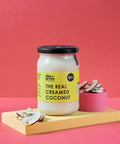
















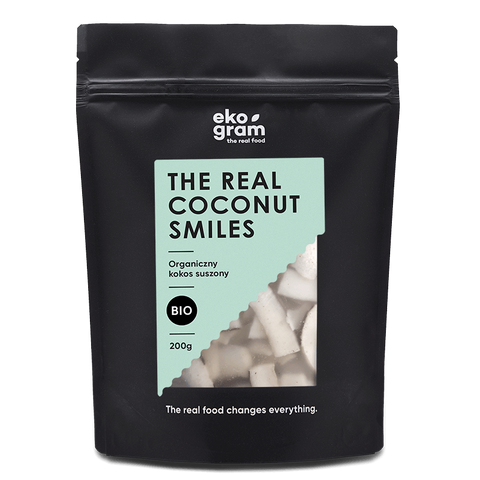
Organic Coconut Smiles 200g

Order by 12:00 and we will send your parcel today (working days)
How much does delivery cost?
- Free delivery for orders over PLN 199
- ORLEN Paczka - PLN 4.99
- InPost Paczkomaty 24/7 - PLN 14.99
- DPD Pickup - PLN 15.99
- InPost Courier - PLN 15.99
- DPD Courier - PLN 16.99
- Personal pickup in Krakow - free
What payment methods are available?
- BLIK
- fast transfer with Tpay
- Apple Pay
- Google Pay
- Credit card

THE REAL DELIVERY* – Package under warranty
We have been shipping glass jars for over 15 years and we know how to do it. If something happens during transport, you don't have to worry about anything.
Just send us a photo and a simple form, and we'll send you new products, no questions asked.
Coconuts, palms, nuts, tropics
The coconut palm probably comes from Polynesia or Southeast Asia. However, this is not scientifically proven information. Difficulties with confirming this thesis result from the fact that the coconut can flow without germination, carried only by sea currents, even several thousand kilometers. It is thanks to this unusual property that it has spread everywhere where there is a tropical climate.
Coconuts are one of nature's most precious gifts. The coconut flesh is white in color and fleshy. After drying it, we get the so-called fennel, which consists mainly of fat (and more precisely unsaturated fatty acids - much more easily digestible and digested by our body), sugar and protein.
Ecological, coconut gift of nature
BIO dried coconut is a naturally gluten-free product. It does not contain any additives. Naturally dried without the use of artificial chemicals. Cut in strips 2 - 3 mm thick.
Coconut, in addition to the high content of saturated fatty acids and high-quality protein, is rich in fiber. Due to the presence of antioxidants, it is one of the most nutritious foods known to man. It also includes 8 amino acids and triglycerides (those with medium chains), important for our body, affecting the absorption of minerals. For this reason, dried coconut is appreciated not only by lovers of healthy, natural snacks, but also by physically active people who are on a slimming diet and vegans.
Dried coconut, a delicious snack, and more
Ecological dried coconut is recommended not only as a wholesome snack during the day. It is also perfect as an addition to countless desserts, home-made cakes and cookies, cocktails and drinks, as well as meat and fish, including grilled ones.
Nutritional value per 100 g
- energy value2761 kJ / 660 kcal
- fat67,9 g
- including unsaturated fats60,7 g
- carbohydrates25 g
- including sugars7,1 g
- protein6,7 g
- salt0,09 g


